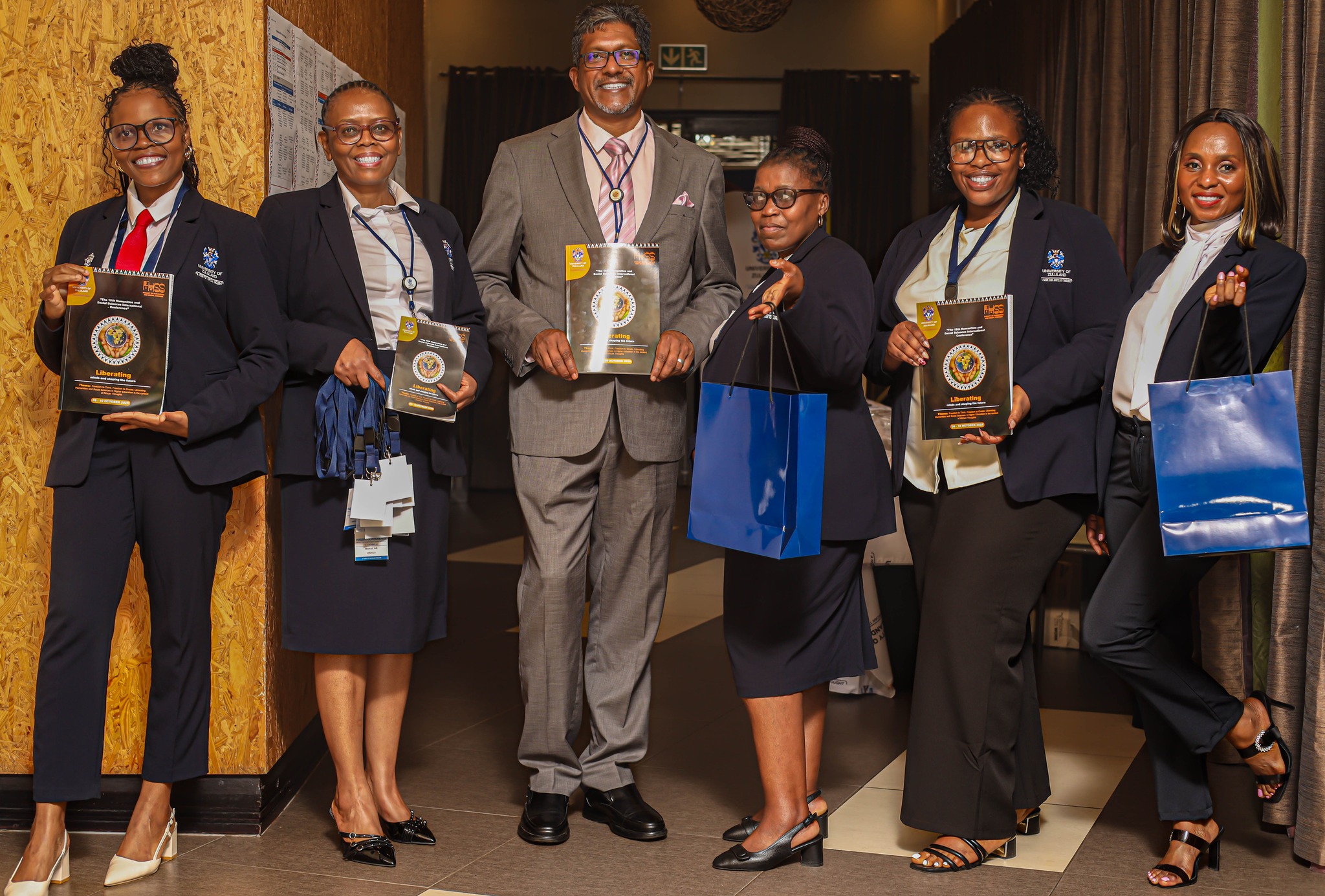
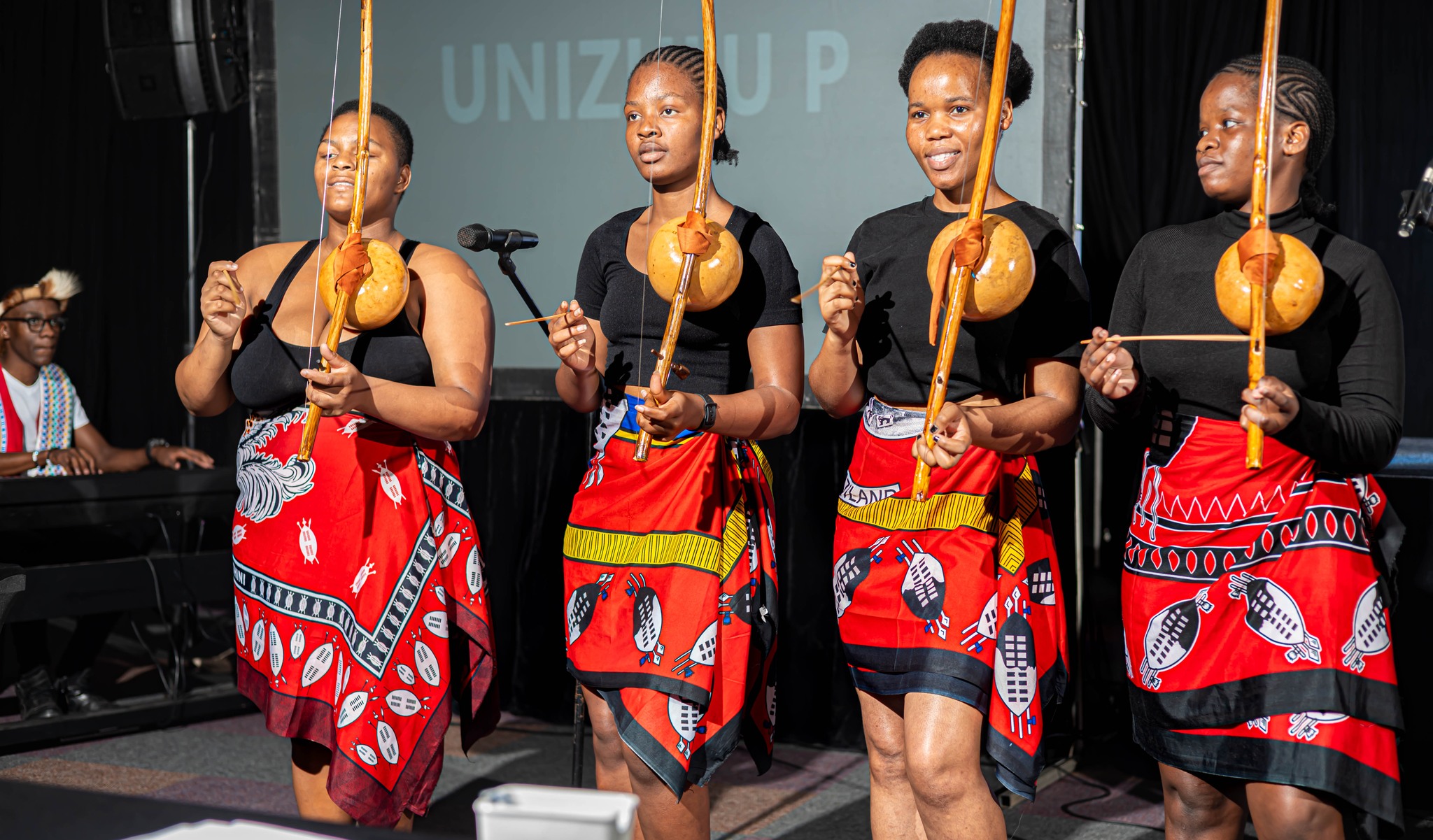
The Faculty of Humanities and Social Sciences (FHSS) at the University of Zululand (UNIZULU) recently hosted the highly successful 15th […]
Read More

The call for full papers is now open: https://aosis.co.za/call-for-papers-for-inkanyiso/Â
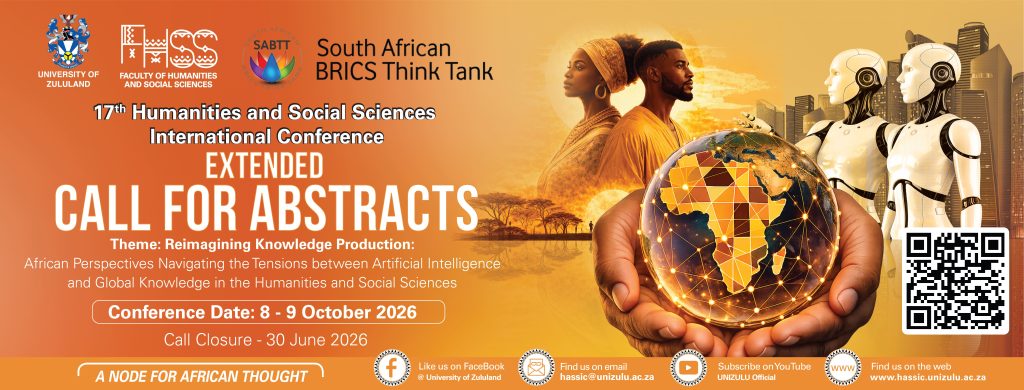
Freedom to Think, Freedom to Create: Liberating Humanities and Social Sciences in Higher Education in the context of African Thought
The theme highlights the pivotal role of the Arts, Languages, Humanities, and Social Sciences (HSS) in promoting intellectual freedom, creativity, and critical thinking within higher education. These disciplines have long held a central place in the university’s core curriculum and academic offerings, shaping how knowledge is produced, contested, and disseminated.
In an era marked by complex global challenges, the humanities and social sciences serve as essential tools for questioning dominant narratives, challenging established discourses, and envisioning more just, inclusive, and sustainable futures.
They foster the intellectual rigour and empathy needed to navigate diverse perspectives and promote meaningful dialogue across cultural, social, and political divides.
This conference invites scholars, lecturers, educators, and practitioners to explore how the HSS fields can drive transformative progress toward the Sustainable Development Goals (SDGs) while redefining their relevance within and beyond academia. Intellectual freedom in these disciplines not only enriches the academic experience but also empowers individuals and communities to confront critical societal issues with nuance and innovation.
Therefore, how does the field of humanities and social sciences challenge dominant discourses and narratives in addressing complex societal challenges?
Focus on subtheme:
This conference offers a critical space to explore the evolving role of the Humanities and Social Sciences (HSS) in shaping research, teaching, and societal impact. The subthemes foreground the enduring value of academic freedom, curriculum innovation, ethical inquiry, and interdisciplinary approaches in addressing global and local challenges. Through diverse perspectives and critical engagement, HSS disciplines contribute to personal transformation, social cohesion, and sustainable development.
The conference will convene scholars, policymakers, and intellectuals to investigate the evolving influence of Liberating Minds and Shaping the Future within African epistemologies, addressing global challenges through an indigenous intellectual framework. Its primary objective is to foster knowledge sharing and collaboration among a diverse audience.
We welcome original research papers, case studies, policy analyses, and practical initiatives that address the connection between Liberating Minds and Shaping the Future in conjunction with SDGs 4, 5,10 and 16 in the context of African Thought. We will also welcome papers with other SDGs and other related research from FHSS academic research clusters that focus on the research niche areas (RNA):
The Faculty of Humanities and Social Sciences (FHSS) at the University of Zululand (UNIZULU) recently hosted the highly successful 15th […]
Read MoreThe Faculty of Humanities and Social Sciences at the University of Zululand is gearing up for its 13th Annual Humanities […]
Read More
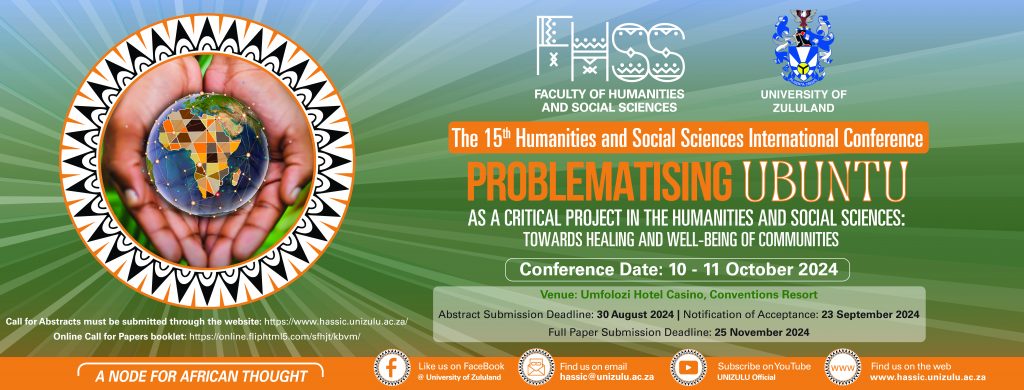


Join us in examining how humanising pedagogies in education and treating wounds might lead to transformation, focusing on SDGs and NDPs in the South African context. Your efforts are crucial in moulding a more sustainable, inclusive, and healing-focused educational environment for the future of South Africa.
For inquiries and submissions, please contact Prof Z Fikelepi-Twani, at hassic@unizulu.ac.za. We look forward to your participation in this meaningful dialogue on humanising humanities and sustainable development in South African higher education.